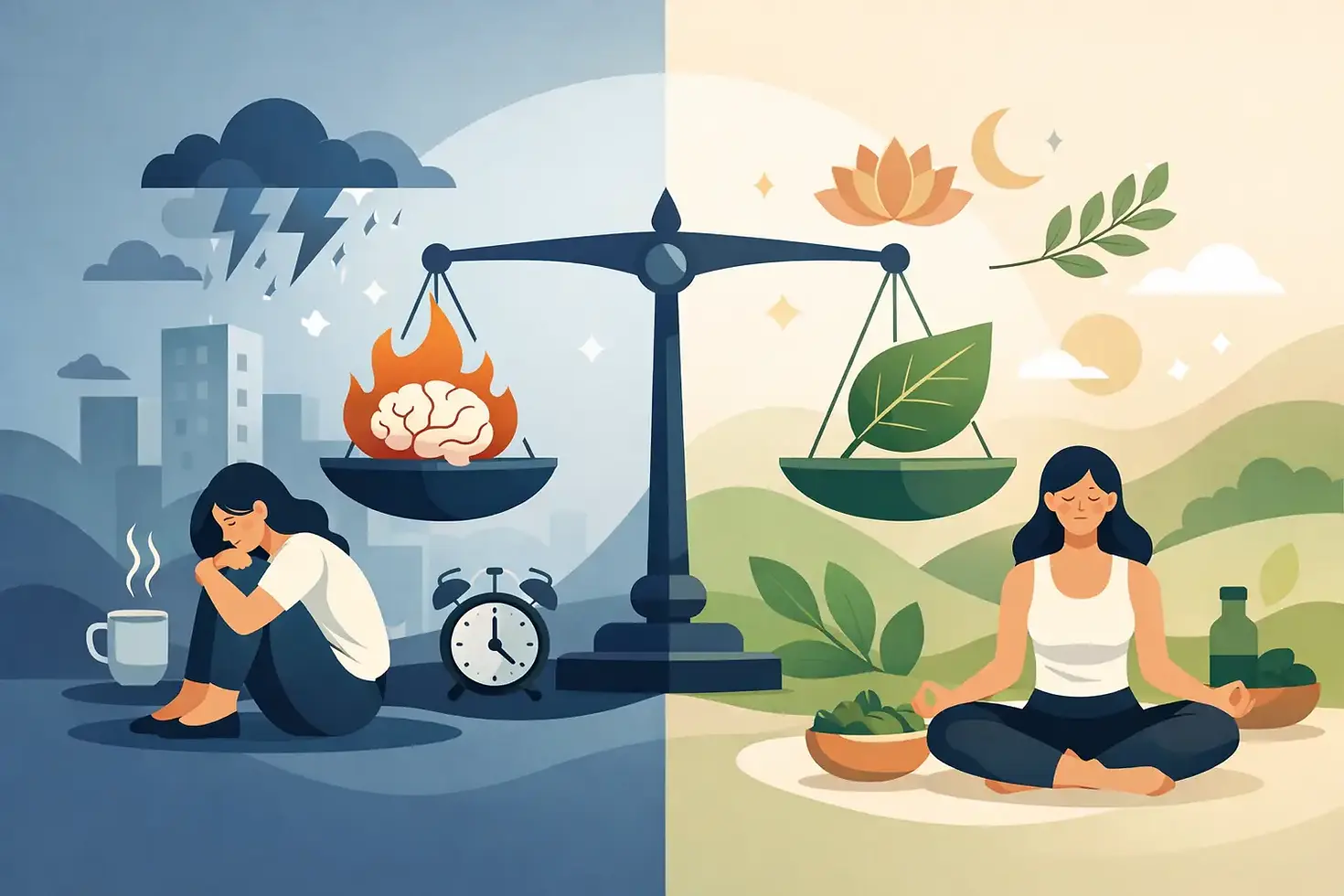
How to Reduce Cortisol Naturally
- By BodyMindSoulGuru
- May 9
- 6 min read
Feeling wired at night, exhausted in the morning, craving sugar, snapping more easily, or noticing stubborn weight around your middle can all point to the same deeper issue. If you have been wondering how to reduce cortisol naturally, the answer is rarely one supplement or one self-care habit. Cortisol reflects how your whole body is responding to stress, blood sugar swings, sleep quality, inflammation, overtraining, and even the pace of your daily life.
Cortisol is not the enemy. It is a vital hormone made by your adrenal glands that helps regulate energy, blood sugar, inflammation, blood pressure, and your sleep-wake rhythm. You need it to wake up, respond to challenges, and stay alive. The problem begins when stress becomes chronic and the body never fully returns to baseline.
That is why a natural cortisol-support plan should focus less on forcing cortisol down and more on restoring balance. For some people, that means calming a constantly activated nervous system. For others, it means eating enough, sleeping more deeply, or exercising in a way that supports recovery instead of draining it. Root-cause healing matters here.
What high cortisol can feel like
Chronically elevated cortisol does not look the same in everyone. Some people feel anxious, restless, and overstimulated. Others feel tired but unable to relax. You may notice poor sleep, increased belly fat, cravings for salty or sugary foods, brain fog, tension headaches, low patience, digestive issues, or a sense that your body is always on edge.
There is also a trade-off worth acknowledging. These symptoms can overlap with thyroid issues, perimenopause, blood sugar dysregulation, depression, sleep apnea, and other health concerns. If symptoms are intense, persistent, or confusing, testing and medical guidance may be appropriate. Natural support works best when it is informed, not guesswork.
How to reduce cortisol naturally at the root
The most effective way to lower stress hormones naturally is to work with the systems that regulate them every day: your nervous system, circadian rhythm, metabolism, and inflammatory load. That means your habits matter more than heroic efforts.
Start with blood sugar stability
One of the fastest ways to push cortisol up is to let blood sugar swing wildly. Skipping breakfast, drinking coffee on an empty stomach, eating very little during the day, then overeating at night can create a stress pattern that keeps cortisol elevated.
A steadier approach is more supportive. Build meals around protein, healthy fats, fiber, and colorful carbohydrates. That might look like eggs with vegetables and avocado, Greek yogurt with berries and seeds, or a salmon bowl with greens and roasted sweet potato. Eating enough is part of stress recovery. Restrictive dieting can backfire, especially if your body already feels overworked.
If you notice afternoon crashes or late-night cravings, look upstream. Those patterns often reflect under-fueling earlier in the day. Balanced meals can be more powerful than another adaptogen when cortisol is being driven by energy instability.
Protect sleep like it is treatment
Poor sleep and high cortisol feed each other. When you are stressed, sleep gets lighter. When sleep is disrupted, cortisol often rises further the next day. This is one of the clearest places to intervene naturally.
Aim for consistent sleep and wake times more than perfection. Get morning light into your eyes within the first hour of waking if possible, and reduce bright overhead light at night. A simple wind-down routine helps signal safety to the nervous system. Gentle stretching, breathwork, reading something calming, or taking a warm shower can be enough.
If you are waking between 2 and 4 a.m. with a racing mind, consider the bigger picture. Alcohol, late intense workouts, blood sugar crashes, and mental overstimulation before bed can all play a role. The right solution depends on what is driving the pattern.
Use breathwork to shift your stress response
Breath is one of the most direct tools for calming stress physiology because it speaks to the nervous system in real time. Slow, controlled breathing can help move you out of a fight-or-flight state and into a more regulated one.
You do not need a complicated practice. Try inhaling gently through the nose for four counts and exhaling for six to eight counts for five minutes. Longer exhales tend to support a parasympathetic response, which is the branch of the nervous system associated with rest and repair. This is especially helpful before meals, before bed, or after a stressful interaction.
Consistency matters more than intensity. A few minutes done daily is often more regulating than a long session done once a week.
Movement can lower cortisol or raise it
Exercise is healthy, but it is still a stressor. That is not a problem when your body has the capacity to recover. If it does not, high-intensity training, long fasting windows, and pushing through exhaustion can keep cortisol elevated.
This is where nuance matters. Some people feel amazing with interval training and strength work a few times per week. Others need a season of gentler support. Walking, yoga therapy, mobility work, light strength training, and short sessions that leave you energized instead of depleted can be better choices during periods of chronic stress.
A useful question is this: how do you feel a few hours after exercise and the next morning? Calm, hungry, pleasantly tired, and clear-headed usually suggest your routine is supportive. Wired, shaky, ravenous, or unable to sleep may suggest your body needs a different dose.
Anti-inflammatory nutrition helps
Inflammation can drive cortisol higher, and chronic stress can increase inflammation. It becomes a loop. Food cannot solve every piece of that loop, but it can reduce the load.
Prioritize whole foods rich in magnesium, omega-3 fats, polyphenols, and antioxidants. Leafy greens, pumpkin seeds, beans, berries, extra virgin olive oil, walnuts, herbs, spices, and fatty fish are all supportive choices. Fermented foods can also help some people by supporting gut health, which has a strong relationship with stress resilience.
It also helps to reduce what keeps the body inflamed or overstimulated. That may mean less ultra-processed food, less alcohol, and a more honest look at caffeine. Some people tolerate coffee well. Others are using it to override fatigue, which can deepen the cycle they are trying to fix.
Herbal and natural support for cortisol balance
Herbs and supplements can be helpful, but they work best as support layers, not the foundation. Magnesium glycinate is often useful for relaxation, muscle tension, and sleep quality. L-theanine may help promote a calmer mental state. Adaptogenic herbs such as ashwagandha, rhodiola, holy basil, or lemon balm can support stress resilience in some cases.
Still, natural does not mean universally right. Ashwagandha may not be ideal for everyone, especially depending on thyroid status, medication use, or individual sensitivity. Rhodiola can feel stimulating for some people. Herbal medicine is most effective when matched to the person, not chosen because it is trending.
If you are taking medications, pregnant, nursing, or managing a health condition, a qualified practitioner can help you make safer choices.
The emotional side of cortisol matters too
You cannot out-supplement a life that never feels safe. Emotional load, unresolved pressure, overcommitment, people-pleasing, and constant digital input all affect cortisol patterns. This is where healing gets personal.
Reducing cortisol naturally may require stronger boundaries, fewer notifications, more time outside, or honest conversations about what is draining you. It may mean eating lunch away from your desk, stopping the habit of answering messages late at night, or giving yourself permission to rest before you earn it.
Mind-body practices can help here because they build awareness. Journaling, meditation, restorative yoga, prayer, time in nature, and guided relaxation all help create moments where the body is not bracing. Those moments count. They teach your system that recovery is possible.
Signs your cortisol-support plan is working
Progress is usually subtle before it is dramatic. You may sleep more deeply, wake with less dread, feel fewer cravings, recover better from workouts, or notice that small stressors do not hit as hard. Digestion may improve. Energy may feel steadier. You may start to feel like yourself again.
This is why sustainable healing matters. Quick fixes often chase symptoms while keeping the same underlying stress patterns in place. A root-cause approach asks better questions. Are you nourished? Are you rested? Do your routines support your hormones or strain them? Does your nervous system ever get a signal that the danger has passed?
At BodyMindSoulGuru, that whole-person lens is the heart of natural healing. Real change happens when food, movement, sleep, mindset, and nervous system care work together instead of competing for your attention.
If you want to know how to reduce cortisol naturally, start smaller than you think and go deeper than trends. Eat enough. Sleep consistently. Breathe slowly. Move in ways that restore you. Support your body with anti-inflammatory nutrition and calming rituals that fit real life. Healing often begins when your body finally believes it is safe to stop surviving and start repairing.


Comments